When a traumatic event — a violent crime, accidental injury, suicide, or unattended death — leaves behind blood or other potentially infectious materials (OPIM), the scene cannot simply be wiped down and forgotten. Bloodborne pathogen cleanup is a regulated, science-based process that safely removes biological hazards, disinfects contaminated surfaces to hospital-grade standards, and restores your property to a safe, habitable condition.
Trusted Crime Scene Cleanup provides professional, discreet bloodborne pathogen cleanup in Arlington, TX and the surrounding Tarrant County communities. Arlington’s dense residential corridors, older housing stock near the University of Texas at Arlington campus, and high-traffic mixed-use districts all present unique remediation challenges — challenges our trained technicians are equipped to handle around the clock.
Read moreShow less
The good news: most homeowners and property insurance policies cover this service in full. You should not have to face cleanup costs during an already devastating time. Call (817) 674-4143 for immediate, compassionate assistance.
Understanding Bloodborne Pathogen Cleanup
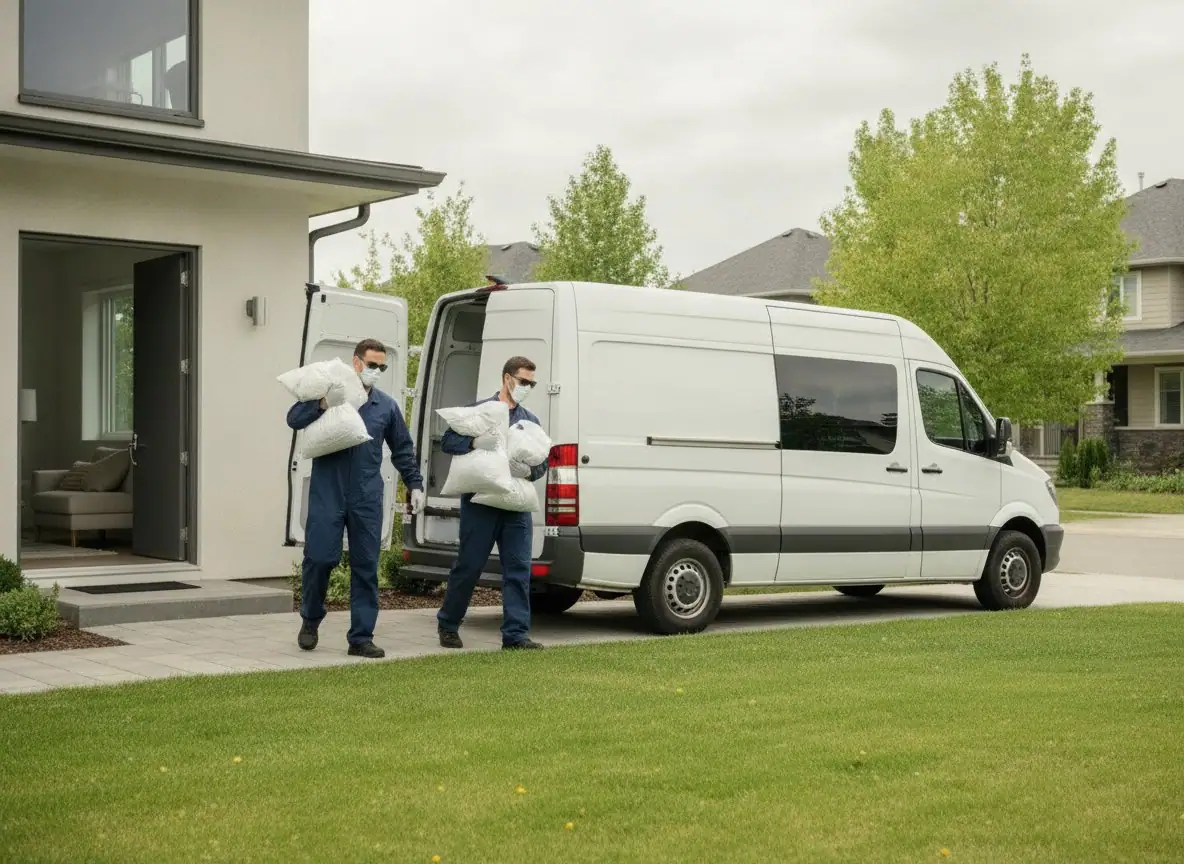
Bloodborne pathogens are microorganisms — primarily viruses and bacteria — carried in human blood and certain other bodily fluids. The U.S. Occupational Safety and Health Administration (OSHA) identifies hepatitis B virus (HBV), hepatitis C virus (HCV), and human immunodeficiency virus (HIV) as the most significant bloodborne threats in occupational and residential settings. However, dozens of other pathogens — including MRSA, Clostridioides difficile (C. diff), and various hemorrhagic fever viruses — can survive in dried blood for hours to days on hard surfaces.
The scope of bloodborne pathogen cleanup extends far beyond what visible staining suggests. Blood seeps into subfloor materials, travels through wall cavities, saturates carpeting and upholstery foam, and can migrate into HVAC ductwork in a matter of hours. A cleanup that addresses only the surface layer leaves behind hidden reservoirs of biological material that continue to pose infection risks and generate odors for months.
Read moreShow less
Federal regulations under OSHA Standard 29 CFR 1910.1030 govern how bloodborne pathogens must be handled in occupational settings, and state guidelines from the Texas Department of State Health Services (DSHS) regulate the handling and disposal of regulated medical waste — which includes blood-soaked materials. Professional remediation companies must follow EPA-registered disinfectant protocols, use appropriate personal protective equipment (PPE), and transport biohazardous waste to licensed disposal facilities.
In Arlington specifically, the mix of mid-century ranch homes, 1970s–1990s apartment complexes along Pioneer Parkway and Division Street, and newer mixed-use developments near AT&T Stadium creates a wide range of structural scenarios. Older homes often have hardwood subfloors, concrete slabs without moisture barriers, and porous grout lines that absorb biological fluids deeply — requiring more intensive remediation than modern vinyl or tile flooring. Understanding these local building characteristics shapes every remediation plan Trusted Crime Scene Cleanup develops for Arlington properties.
Learn more about our full biohazard cleanup services
Signs You Need Professional Bloodborne Pathogen Cleanup
Visible Biological Material
- Visible blood staining on floors, walls, ceilings, furniture, or personal belongings — even if the volume appears small
- Bodily fluids other than blood present at the scene (saliva, vomit, urine, or other OPIM)
- Tissue, bone, or organic matter from a traumatic injury or decomposition event
Odor Indicators
- A persistent metallic or sweet-sour odor that commercial cleaning products cannot eliminate
- A strong ammonia or putrefactive odor indicating decomposition has begun — common in Arlington’s summer heat after even 12–24 hours
- Odor emanating from wall cavities, subfloor areas, or HVAC vents, suggesting biological material has migrated beyond the visible scene
Structural Penetration Concerns
- Blood or fluid has reached carpet padding, hardwood flooring, or the concrete slab beneath
- Staining visible at baseboards or where flooring meets walls, indicating lateral spread
- Drywall or plaster shows saturation or discoloration from biological contact
Urgency Indicators
- The incident occurred more than 2 hours ago in warm weather — Arlington summer temperatures above 85°F accelerate pathogen proliferation significantly
- A law enforcement agency or medical examiner has indicated the property contains a biohazard
- Occupants, children, pets, or other vulnerable individuals remain in or near the affected space
Free, no-obligation estimates
Talk to Trusted Crime Scene Cleanup
Tell us what you need and we’ll take it from there.
Bloodborne Pathogen Remediation Methods We Use
1. Physical Removal and Disposal
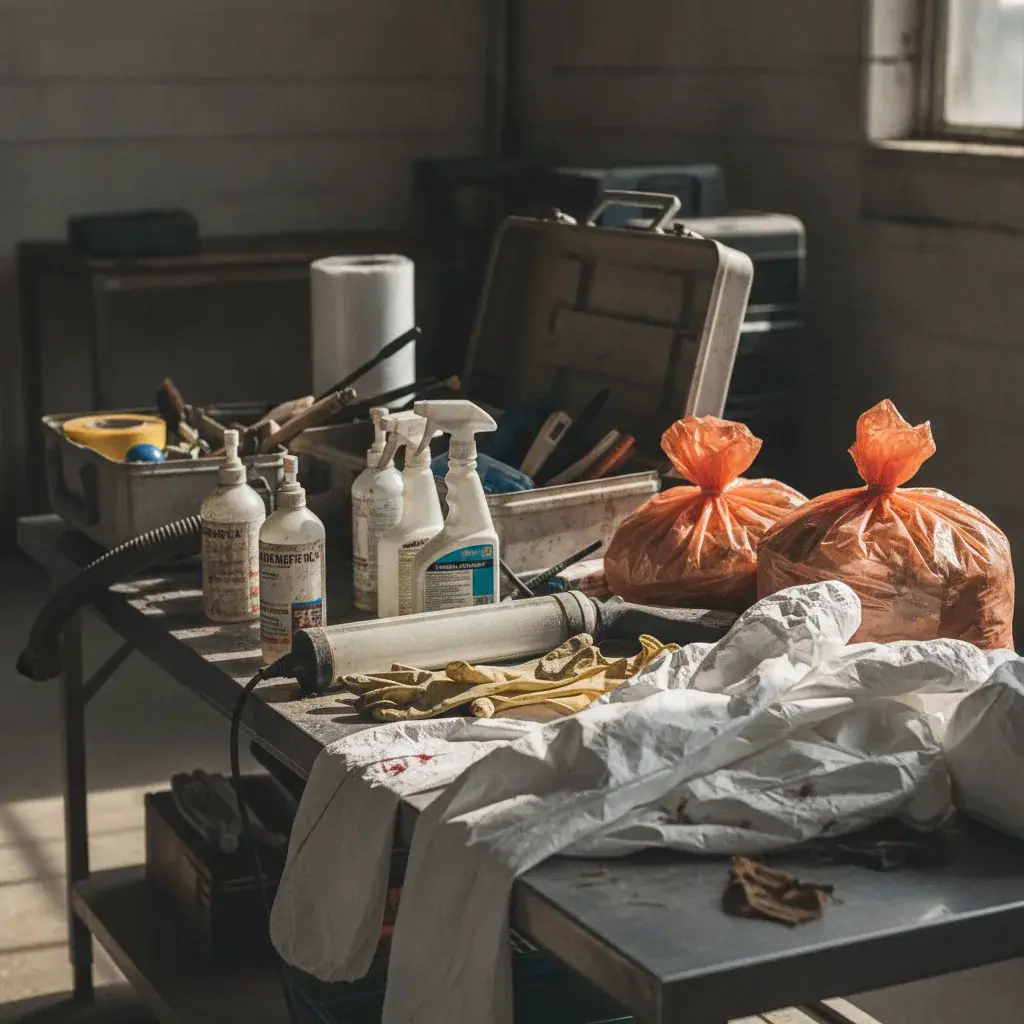
The primary method for any scene with significant blood volume. Contaminated porous materials (carpet, drywall, insulation, wood) are physically removed and transported to a licensed medical waste disposal facility in compliance with Texas DSHS regulations. This is always the first line of defense before any chemical disinfection is applied, because disinfectants cannot penetrate thick organic material effectively.
2. Chemical Disinfection with EPA-Registered Agents
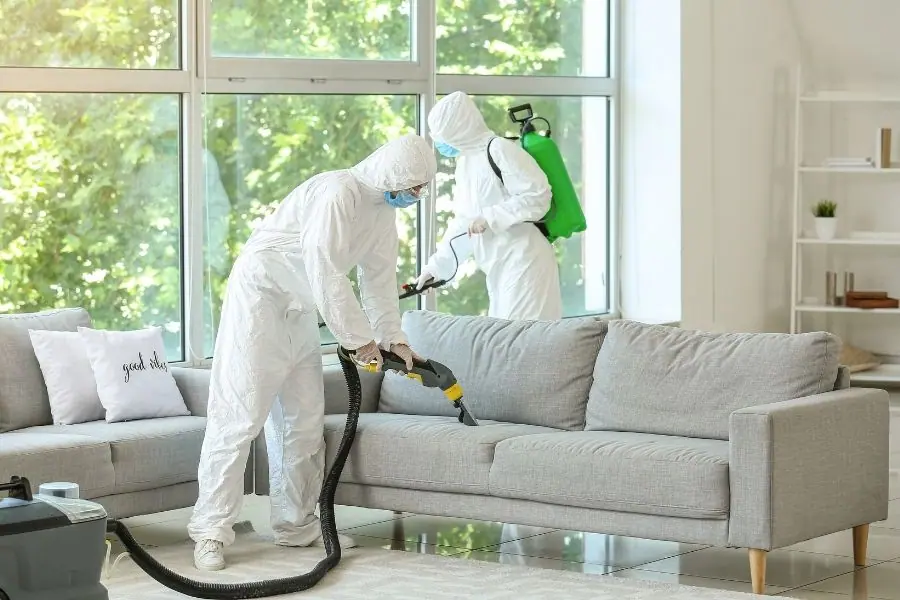
After physical removal, all hard, semi-porous, and structural surfaces are treated with EPA List Q or List N disinfectants appropriate to the specific pathogens of concern. In Arlington properties with tile grout, the chemical dwell time is extended and followed by steam treatment to penetrate the porous grout matrix — a local building-specific adaptation.
3. Hydroxyl and Ozone Odor Neutralization
Hydroxyl generators produce hydroxyl radicals that break down odor-causing volatile organic compounds (VOCs) at a molecular level. We prefer hydroxyl over ozone in occupied multi-unit buildings because hydroxyl treatment does not require evacuating adjacent units — a practical advantage in Arlington’s dense apartment complexes near UTA.
4. Thermal Fogging
For scenes with deep structural penetration — such as blood that has seeped into wall cavities in older wood-frame homes along Fielder Road or in the Pantego area — thermal fogging delivers deodorizing and disinfecting agents in aerosolized form that follows the same pathways the biological fluid traveled.
5. HEPA Vacuuming and Air Scrubbing
HEPA air scrubbers run continuously during remediation to capture airborne biological particulates. This is particularly important in Arlington during high-pollen seasons (spring cedar and fall ragweed), when HVAC systems run frequently and can redistribute contaminated air if not properly managed.
Bloodborne Pathogen Cleanup Cost in Arlington, TX — and Why You Likely Pay $0
For those without applicable insurance coverage, or for reference when reviewing an insurance estimate, here are typical price ranges for bloodborne pathogen cleanup in the Arlington, TX market:
- Small scene (single room, limited surface contact): $1,500 – $3,500
- Medium scene (multiple rooms, carpet and subfloor involvement): $3,500 – $8,000
- Large or complex scene (whole-structure contamination, decomposition, or multi-unit property): $8,000 – $25,000+
- Vehicle interior decontamination: $500 – $2,500 depending on saturation level
Factors That Affect Cost
- Volume and distribution of biological material — larger scenes require more labor hours and disposal containers
- Material penetration depth — Arlington’s slab foundations with clay-induced micro-cracking can mean additional subfloor extraction costs
- Structural materials involved — porous concrete, hardwood floors, and plaster walls cost more to remediate than tile or sealed concrete
- Time elapsed since incident — decomposition adds complexity and cost due to odor remediation requirements
- Time of service — after-hours and weekend response may carry a premium, though most insurance policies cover this as well
Read moreShow less
We never require upfront payment from the property owner. If your insurance policy covers the work — as most policies do — we collect directly from the carrier. If coverage is uncertain, we help you understand your policy before any obligation is created.
How our insurance billing process works
Arlington Neighborhoods We Serve
Interlochen / Southeast Arlington
This area southeast of I-20 features a mix of 1970s brick ranch homes on concrete slabs and 1990s-era wood-frame construction. The slab foundations here are particularly susceptible to clay-induced cracking, making sub-slab fluid migration a frequent concern during biohazard remediation.
UTA Campus Area (Cooper Street / Mitchell Street Corridor)
Dense apartment complexes serving the University of Texas at Arlington student population present multi-unit contamination challenges. Thin construction, shared HVAC systems, and high tenant turnover rates mean property managers in this corridor are among our most frequent commercial clients.
North Arlington / Viridian and Ladera
Newer construction (2005–present) in master-planned communities features more modern flooring materials, but HOA-governed communities have strict timelines for restoring properties to presentable condition — driving demand for rapid, discreet remediation services.
West Arlington / Dalworthington Gardens and Pantego
These older incorporated communities within Arlington’s borders contain mid-century homes with original hardwood floors and plaster walls — highly porous materials that require extended remediation timelines compared to modern construction.
We also serve surrounding communities including Hurst, Euless, Bedford, Irving, Mansfield, Cedar Hill, Fort Worth, Grand Prairie, North Richland Hills, Haltom City, Kennedale, Forest Hill, Richland Hills, Duncanville, and Dalworthington Gardens.
Prevention and Preparedness Tips for Arlington Property Owners
- Seal concrete floors and grout annually. Arlington’s expansive clay soil causes seasonal foundation movement that opens micro-cracks in concrete and tile grout. Annual sealing significantly reduces biological fluid penetration if an incident occurs.
- Install surface-mount (not recessed) baseboards in high-risk areas. Recessed baseboards create channels that trap biological fluids and are difficult to decontaminate; surface-mount alternatives are far easier to clean and replace if needed.
- Review your homeowners or renters insurance policy annually. Confirm that your policy includes coverage for sudden and accidental pollution or biohazard events — and call us if you need help understanding your policy language.
- Keep an emergency contact card accessible. In a traumatic situation, cognitive function is impaired. Having our number — (817) 674-4143 — pre-saved ensures you can reach certified help immediately.
- Do not attempt DIY cleanup of bloodborne hazards. Consumer bleach solutions at typical dilutions do not achieve sufficient dwell time or penetration to reliably eliminate hepatitis B virus on porous surfaces, and improper handling creates personal legal and health liability.
- In commercial properties, post an emergency response plan. Businesses in Arlington’s entertainment district and industrial areas should include a biohazard cleanup contact in their written emergency response procedures, per OSHA Bloodborne Pathogens Standard compliance recommendations.
- Maintain low interior humidity. Arlington’s summer humidity combined with any residual biological material creates ideal mold co-growth conditions. Keeping indoor humidity below 50% reduces secondary biological hazards following any fluid release event.
FAQ
Frequently Asked Questions About Bloodborne Pathogen Cleanup in Arlington, TX
Q: Does my homeowners insurance actually cover bloodborne pathogen cleanup in Arlington?
A: In most cases, yes. Most standard homeowners and property insurance policies include coverage for sudden and accidental events that result in biohazardous contamination — including violent crimes, accidents, and deaths on the property. We recommend calling us first at (817) 674-4143; we will review your policy with you and contact your carrier directly if coverage is indicated. We cannot guarantee every policy covers every situation, but the majority of our Arlington clients pay $0 out of pocket.
Q: How quickly can you respond to a bloodborne pathogen scene in Arlington?
A: We respond 24 hours a day, 7 days a week, 365 days a year. For locations within Arlington city limits, our typical on-site arrival time is 60–90 minutes from your call. Given Arlington’s summer temperatures — which can accelerate pathogen growth significantly within just hours — rapid response is a critical service component.
Q: Can I clean up blood or bodily fluids myself?
A: Legally, no regulations prohibit a property owner from attempting cleanup, but it is strongly discouraged. Consumer disinfectants do not reliably eliminate hepatitis B virus on porous surfaces at typical dilutions and dwell times. Additionally, improper disposal of blood-soaked materials may violate Texas DSHS medical waste regulations. Beyond the health risk, DIY cleanup typically leaves hidden contamination that generates odors and ongoing biological hazards for months.
Q: How long does bloodborne pathogen cleanup take in Arlington?
A: A typical single-room scene in an Arlington home takes 4–8 hours from technician arrival to completed clearance testing. Larger scenes involving subfloor extraction, multiple rooms, or decomposition may require 1–3 days. Older Arlington homes with clay-induced slab cracking or original hardwood floors generally require more time than newer construction.
Q: Will my neighbors or landlord know why the cleanup crew is at my property?
A: We work with complete discretion. We arrive in unmarked vehicles upon request, wear non-branded PPE, and do not discuss client situations with anyone not directly involved in the insurance claim. In Arlington’s denser apartment communities near UTA, we coordinate timing to minimize visible activity in common areas.
Q: What happens to materials removed from the scene?
A: All blood-contaminated materials — carpet, padding, drywall, subfloor sections, and personal items — are double-bagged in UN-certified biohazard containers and transported to a licensed medical waste treatment and disposal facility in compliance with Texas DSHS regulations. You receive documentation of disposal as part of your clearance report.
Q: Do you also serve areas outside Arlington proper?
A: Yes. In addition to all Arlington zip codes, we serve Hurst, Euless, Bedford, Irving, Mansfield, Cedar Hill, Fort Worth, Grand Prairie, North Richland Hills, Haltom City, Kennedale, Forest Hill, Richland Hills, Duncanville, Pantego, and Dalworthington Gardens — the entire greater Tarrant and southern Dallas County region.
Q: What is the difference between bloodborne pathogen cleanup and regular crime scene cleanup?
A: Bloodborne pathogen cleanup specifically addresses biological materials — blood, plasma, and other potentially infectious materials (OPIM) — using EPA-registered disinfectants and regulated waste disposal. Crime scene cleanup is a broader term that encompasses bloodborne pathogen cleanup but may also include fingerprint powder removal, chemical residue cleanup, and structural repairs. Most Arlington crime scenes involving injury require bloodborne pathogen protocols as a core component.
Get Immediate Help — Bloodborne Pathogen Cleanup in Arlington, TX
You should not have to face the aftermath of a traumatic event alone — and you should not have to pay for professional cleanup out of your own pocket. Most homeowners and property insurance policies cover 100% of bloodborne pathogen cleanup costs. Trusted Crime Scene Cleanup bills your insurance directly and manages the entire claim process.
Our team is available 24 hours a day, 7 days a week and can typically reach any Arlington location within 60–90 minutes.
Discreet. Compassionate. Insurance-managed. Available right now.
Contact Trusted Crime Scene Cleanup online
View all service areas in Tarrant County and beyond

Why choose us
Why choose Trusted Crime Scene Cleanup?
Free estimates
Get a clear, no-obligation estimate before any work begins.
Licensed & insured
Your property and our crew are protected on every project.
Residential & commercial
One team for homes, multi-family and commercial properties.
Locally owned & operated
A local team serving your community and the surrounding area.
Get in touch
Find crime scene cleanup help near you
Request a free estimate online or give us a call — our team will follow up quickly.
- Call us+1 (945) 941 21-70
- Hours24h