Biohazard Cleanup Company Available 24/7 Nationwide
Biohazard cleanup is the professional removal, decontamination, and lawful disposal of blood, bodily fluids, infectious materials, and other substances that can spread disease. Trusted Crime Scene Cleanup is a biohazard cleanup company serving homes, businesses, landlords, and public facilities across the United States, with 24/7 emergency service and free inspections.
This page explains what counts as a biohazard, how the work is done safely and legally, what affects cost and timing, and how to choose a provider. If you are dealing with a scene right now, call +1 (945) 941 21-70 at any hour.
What is considered a biohazard clean up?
A biohazard cleanup is any cleanup involving biological material that can carry pathogens, such as blood, bodily fluids, tissue, or surfaces contaminated by an infectious disease. Common situations include unattended deaths, suicides, homicides, assaults, industrial accidents, decomposition, and illness outbreaks in homes or workplaces.
The defining factor is risk, not appearance. A small amount of dried blood can still carry hepatitis B for days, and fluids often soak into flooring, drywall, and subfloors where they cannot be seen. Biohazard work also includes related hazards that call for similar protective methods, including fentanyl residue, meth lab contamination, chemical spills, and tear gas. Because these jobs involve regulated materials, many people reasonably ask whether this kind of cleaning is even legal for a private company to perform.
Is crime scene cleaning legal?
Yes, crime scene cleaning is legal, and it is a regulated trade that private companies perform once law enforcement has released the scene. Police, medical examiners, and fire departments do not clean scenes; responsibility for cleanup passes to the property owner, who typically hires a specialist.
Several sets of rules apply to the work:
- Worker safety: The federal OSHA Bloodborne Pathogens Standard (29 CFR 1910.1030) sets requirements for training, protective equipment, exposure control plans, and hepatitis B vaccination availability.
- Waste handling: Regulated medical waste is governed mainly by state rules, and shipping it on public roads falls under U.S. Department of Transportation hazardous materials regulations.
- State requirements: Some states require trauma scene or biohazard companies to register or hold specific permits, so requirements differ by location.
Within those rules, the range of scenes a biohazard company can lawfully handle is broad, which brings up the question of which types of cleanup we take on.
Free, no-obligation estimates
Talk to Trusted Crime Scene Cleanup
Tell us what you need and we’ll take it from there.
At a glance
What types of biohazard cleanup do we handle?
We handle blood and bodily fluid cleanup, infectious disease decontamination, vehicle biohazard cleanup, and related trauma, death, and drug-contamination scenes. The table below covers the core categories.
| Biohazard type | Typical situations | Main concerns |
|---|---|---|
| Blood cleanup and bloodborne pathogen cleanup | Injuries, assaults, suicides, homicides, accidents | HIV, hepatitis B and C; blood soaking into porous materials |
| Bodily fluid cleanup services | Vomit, urine, feces, decomposition fluids, sewage-mixed waste | Bacteria and viruses, odor, structural saturation |
| Infectious disease decontamination | Outbreaks in homes, offices, schools, care settings | Surface transmission on high-touch areas |
| Vehicle biohazard cleanup | Deaths or injuries in cars, trucks, and fleet vehicles | Fluids in upholstery, carpet padding, and vents |
We also provide trauma scene cleanup services, unattended death cleanup, decomposition cleanup and odor removal, meth lab and clandestine drug lab cleanup, fentanyl decontamination, chemical spill cleanup, tear gas and fingerprint dust cleanup, hotel and motel trauma cleanup, and tenant death cleanup. Whatever the scene, the work follows the same core method.
How does professional biohazard cleanup work?
Professional biohazard cleanup works through a fixed sequence: assess, contain, remove, clean, disinfect, verify, and dispose of waste lawfully.
- Inspection and assessment: A technician confirms the scene has been released, maps every affected area, and identifies hidden contamination under flooring, behind baseboards, and inside furniture.
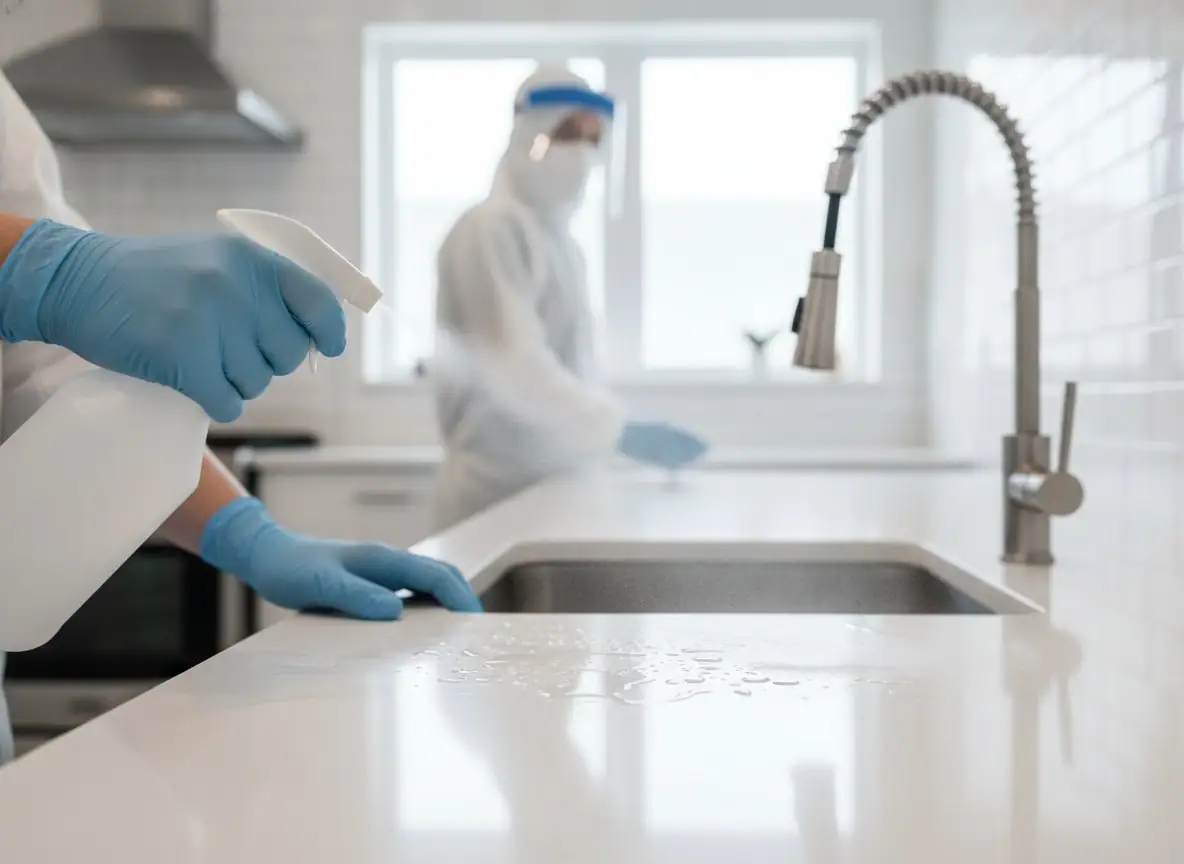
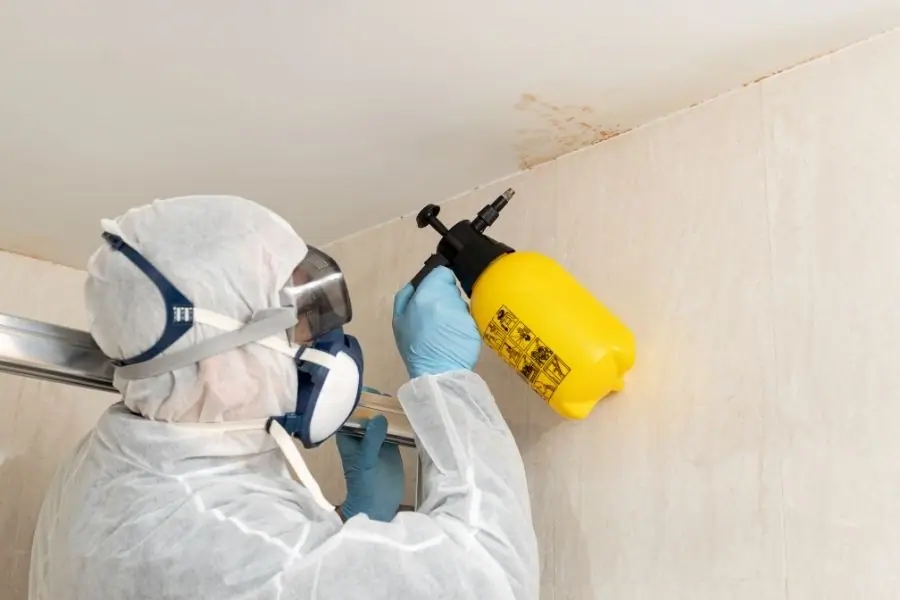
- Protection and containment: Technicians put on personal protective equipment, set up control zones, and seal off the area with plastic sheeting to keep contaminants from spreading.
- Gross removal: Visible material is removed, and porous items that cannot be safely cleaned, such as soaked mattresses, carpet, padding, and drywall, are cut out and bagged.
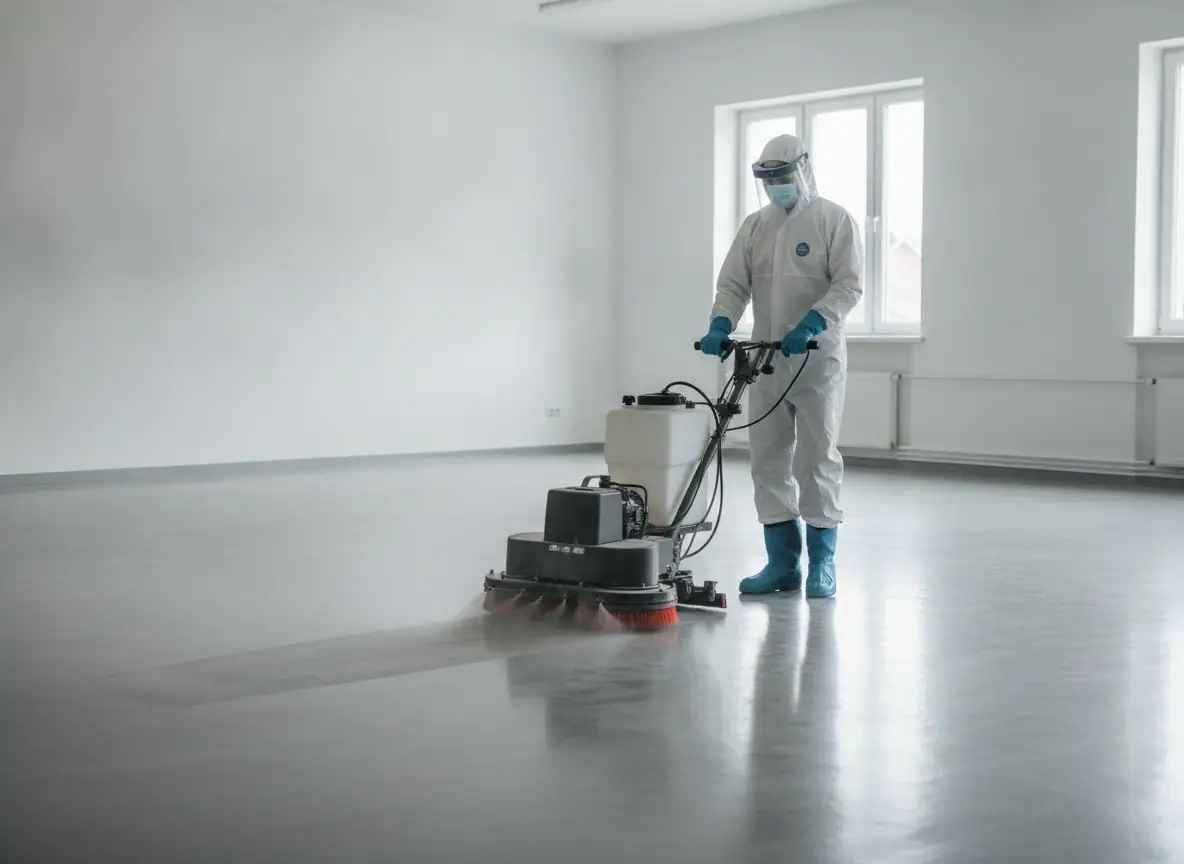
- Cleaning: Hard surfaces are cleaned first, because disinfectants work poorly on soiled surfaces.
- Disinfection: EPA-registered disinfectants are applied and left on surfaces for the full contact time listed on the label.
- Deodorization: Remaining odor is treated at its source rather than masked.
- Final check: The area is inspected again before it is returned to the owner.
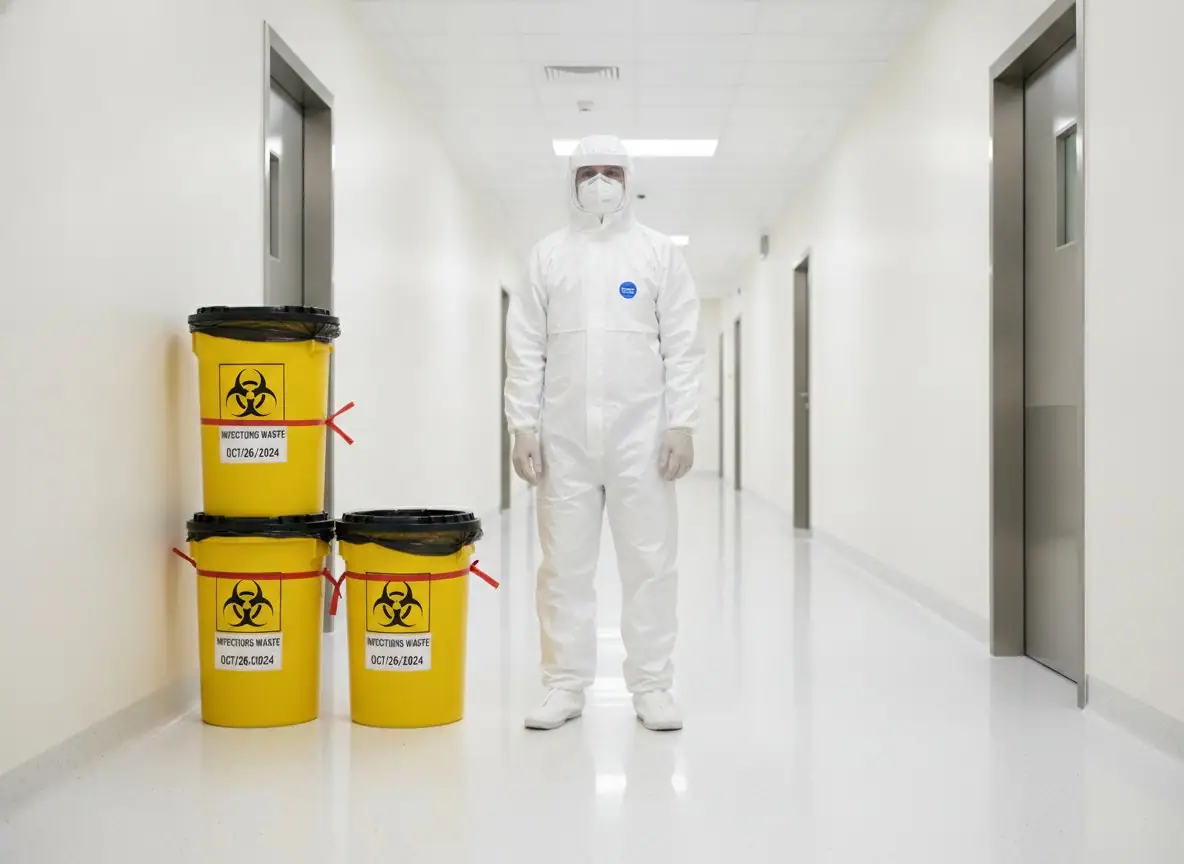
- Regulated waste disposal: Contaminated materials are packed in leak-resistant, labeled biohazard containers, transported under applicable rules, and delivered to a permitted treatment facility, where the waste is typically autoclaved or incinerated. Tracking paperwork documents the chain of custody.
The number of steps is fixed, but the time each one takes is not.
How long does biohazard cleanup take?
Most biohazard cleanups take from a few hours to several days, depending on the size of the affected area and how deeply contamination has penetrated. A small blood spill on sealed tile may be finished in one visit, while a decomposition scene that has soaked into subflooring can require demolition, several disinfection cycles, and extended odor treatment.
Timing depends on:
- How long material sat before discovery
- Whether porous building materials must be removed
- Square footage and number of rooms
- Clutter or hoarding conditions that slow access
- Whether odor treatment is needed after cleaning
After the free inspection, we explain the expected schedule. Those same factors also drive the price.
At a glance
Is biohazard cleanup expensive?
Biohazard cleanup costs depend on the specific scene, so a small, contained job can be modest while a large or long-undiscovered scene costs more. We do not quote prices without seeing the site. We provide a written quote after a free inspection.
| Cost factor | Why it matters |
|---|---|
| Size of affected area | More square footage means more labor, supplies, and waste. |
| Materials involved | Sealed surfaces clean in place; carpet, drywall, and wood often must be removed. |
| Access | Upper floors, crawl spaces, vehicles, and cluttered rooms take longer. |
| Tear-out and rebuild prep | Cutting out subfloor or wall sections adds labor and disposal volume. |
| Waste volume | Regulated waste is billed by container and disposal requirements. |
| Extent of damage | Time since the event affects saturation, odor, and the number of treatment rounds. |
For more detail, see biohazard cleanup cost and pricing factors. Financing is available. For many property owners, the larger question is whether insurance will cover the work.
Does insurance pay for biohazard cleanup?
Insurance often pays for biohazard cleanup, particularly under homeowners or commercial property policies when the event is sudden and accidental, such as a death, suicide, or violent crime. Coverage depends on your policy language, deductibles, and exclusions.
- Homeowners and renters policies may cover cleanup and damaged structure or contents.
- Commercial property policies may apply to businesses, hotels, and rental buildings.
- Auto policies with comprehensive coverage may apply to vehicle biohazard cleanup.
- State crime victim compensation programs sometimes reimburse cleanup costs for victims of violent crime.
We help homeowners with insurance claims by documenting the scene and providing the information adjusters typically request. Insurance and billing work somewhat differently for institutional clients, including correctional facilities.
Jail and prison cell decontamination
We provide jail and prison cell decontamination for correctional facilities that need cells, holding areas, and common spaces cleaned after blood, bodily fluid, or infectious disease incidents. Cells often have porous grout, fixtures, mattresses, and ventilation openings where contaminants collect, and incidents can involve deliberate fluid exposure.
- Facility staff: We coordinate with administrators and security staff on escort, access, and tool control so the work fits within facility procedures.
- Inmate safety: Affected areas are contained and disinfected so incoming occupants are not exposed to residual pathogens or harsh chemical residue.
- Minimal downtime: We plan the work to return cells and housing units to service as quickly as safe decontamination allows, which matters for facilities with limited bed space.
Institutional work like this reasonably raises questions about who is qualified to perform it, including whether technicians need formal degrees.
Do you need a degree to be a forensic cleaner?
No, you do not need a college degree to be a forensic cleaner, but you do need specific safety training. Under OSHA rules, employers must train workers who could be exposed to blood or other potentially infectious materials and must offer the hepatitis B vaccine.
Typical training covers bloodborne pathogens, respiratory protection and fit testing, hazard communication for cleaning chemicals, proper donning and removal of PPE, and waste packaging. Equally important is the ability to work calmly and respectfully in homes where families are grieving. Since training requirements focus on safety rather than degrees, homeowners need a practical way to judge a provider.
How do you choose a biohazard cleanup company?
Choose a biohazard cleanup company by confirming its training, insurance, waste disposal practices, and written quoting process before work begins. Use this checklist with any provider:
- Do technicians have documented OSHA bloodborne pathogens training?
- Is there a written exposure control plan and a respiratory protection program?
- Can the company explain how and where regulated waste is disposed of, and provide disposal paperwork?
- Does it meet any registration or permit requirements in your state?
- Can it show proof of insurance?
- Will it inspect the scene and provide a written quote before starting?
- Will it work with your insurance company?
- Does it use EPA-registered disinfectants and follow label contact times?
- Is it available around the clock?
Read moreShow less
Trusted Crime Scene Cleanup is insured. We offer 24/7 emergency service, free inspections, written quotes, help with insurance claims, and financing. You can learn more about our company or browse all our cleanup services. When you are ready, the next step is simple.
Request a free inspection or call 24/7
To start your biohazard cleanup, call +1 (945) 941 21-70 at any hour or use the free inspection form on this page. Tell us what happened, where it is, and whether police have released the scene. We will schedule an inspection, explain what the work involves, and give you a written quote. You can also reach us through our contact page.
FAQ
Frequently asked questions
How much does a biohazard cleanup person make?
Pay for biohazard technicians varies widely by region, employer, experience, and how often a person is on call for nights and weekends. Workers with supervisory duties or specialized skills, such as drug lab decontamination, generally earn more than entry-level technicians.
How much money do you get for cleaning up a crime scene?
Earnings per scene depend on whether a technician is paid hourly or salaried and on the size and difficulty of the job. Companies price each scene individually based on labor, materials, and waste disposal, so there is no standard per-scene amount.
Can I clean biohazards myself?
For a tiny spill on a hard surface, a homeowner with gloves and a proper disinfectant may manage it. For anything larger, anything involving porous materials, or any death scene, we strongly advise against it. Without training and PPE you risk exposure to bloodborne pathogens, you may miss hidden contamination, and you cannot lawfully dispose of large amounts of regulated waste with household trash.
What happens to biohazardous waste after removal?
It is sealed in labeled, leak-resistant biohazard containers, transported under applicable regulations, and taken to a permitted medical waste facility where it is typically autoclaved or incinerated. Disposal records document the waste from pickup to treatment.
What PPE do biohazard technicians wear?
Typical PPE includes fluid-resistant coveralls, double nitrile gloves, boot covers, eye protection, and respirators matched to the hazard, ranging from filtering facepieces to full-face respirators with appropriate cartridges for chemical or drug residue. PPE is removed in a set order to avoid contaminating skin or clothing.
Should I wait for police to release the scene first?
Yes. If police, a medical examiner, or another investigator is involved, cleanup cannot begin until they formally release the scene, because evidence may still be collected. You can call us before release so we are ready to schedule an inspection as soon as you get the go-ahead.
For a free inspection and a written quote, call Trusted Crime Scene Cleanup at +1 (945) 941 21-70, 24 hours a day.
Why choose us
Why choose Trusted Crime Scene Cleanup?
Free estimates
Get a clear, no-obligation estimate before any work begins.
Licensed & insured
Your property and our crew are protected on every project.
Residential & commercial
One team for homes, multi-family and commercial properties.
Locally owned & operated
A local team serving your community and the surrounding area.
Get in touch
Find crime scene cleanup help near you
Request a free estimate online or give us a call — our team will follow up quickly.
- Call us+1 (945) 941 21-70
- Hours24h