Trauma Scene Cleanup Services Nationwide
Trauma scene cleanup is the specialized removal, disinfection, and safe disposal of blood, bodily fluids, and other biological hazards left behind after an accident, a suicide, an unattended death, a violent crime, or a medical emergency. Trusted Crime Scene Cleanup provides this service across the United States for homeowners, families, landlords, and businesses, with 24/7 emergency service and free inspections.
This page explains what the work involves, how it differs from what police and investigators do, what drives the cost, and how insurance may help. If you need help now, call +1 (945) 941 21-70 at any hour.
What is trauma scene cleanup?
Trauma scene cleanup, also called biohazard remediation or crime and trauma scene decontamination, is the professional process of making a property safe again after blood or other potentially infectious material has been released. Blood and bodily fluids can carry bloodborne pathogens such as hepatitis B, hepatitis C, and HIV. These fluids soak into porous materials like carpet pad, drywall, and wood subflooring, so surface wiping does not remove the hazard.
The work covers three things a regular cleaning service is not equipped to do:
- Removal of blood, tissue, fluids, and any contaminated materials that cannot be safely sanitized.
- Decontamination of every remaining surface with disinfectants proven effective against bloodborne pathogens.
- Disposal of the waste as regulated medical waste under state and federal rules.
Many people searching for this help are not sure whether it is a recognized profession at all.
Is trauma cleaning a thing?
Yes, trauma cleaning is an established specialty, and it exists because police, fire departments, and medical examiners do not clean a scene after they leave. That gap often surprises families.
Here is how the law enforcement handoff works:
- Police and investigators secure the area, document it, and collect evidence.
- The medical examiner, coroner, or funeral home handles removal of the deceased.
- Investigators release the scene back to the owner or responsible party once they no longer need access.
- Trauma cleaners step in after that release. We do not enter an active scene, and we do not handle evidence.
Investigators may leave fingerprint powder, chemical residue, or tear gas behind, and we clean those up as well. The kind of event that happened shapes the work, so it helps to know which scenes this service covers.
Free, no-obligation estimates
Talk to Trusted Crime Scene Cleanup
Tell us what you need and we’ll take it from there.
At a glance
What types of trauma scenes do we clean?
We clean any residential, commercial, or vehicle scene where blood, bodily fluids, or tissue are present, whether the cause was violent, accidental, or medical. The table below shows the most common scene types and where to read more.
| Scene type | What it usually involves | Learn more |
|---|---|---|
| Suicide | Concentrated blood and tissue, often in one room, sometimes with projectile contamination | suicide cleanup company |
| Homicide | Blood across multiple surfaces or rooms, plus fingerprint powder and investigative residue | homicide scene cleanup |
| Hotel or motel room | Mattresses, upholstered furniture, and carpet in a space that must return to service quickly | hotel and motel trauma cleanup |
| Unattended death | Decomposition fluids and strong odor that worsen with time | unattended death cleanup |
| Assault | Blood trails across floors, walls, and furniture | See the section below |
| Accidents and industrial injuries | Blood on equipment, concrete, or work areas | biohazard cleanup services |
| Vehicles | Fluids absorbed into seats, carpet, and headliners | See the FAQ below |
Each scene is different, but the cleanup process follows the same core steps.
What does trauma scene cleanup involve?
Trauma scene cleanup involves assessing the contamination, protecting the rest of the property, removing what cannot be saved, disinfecting what can, and disposing of the waste legally. A typical job runs in this order:
- Inspection and assessment. We identify every affected area, including fluid that has traveled under flooring or behind baseboards, and give you a written quote.
- Containment. We seal off the work area with plastic sheeting and set up clean and dirty zones so contamination does not spread to unaffected rooms.
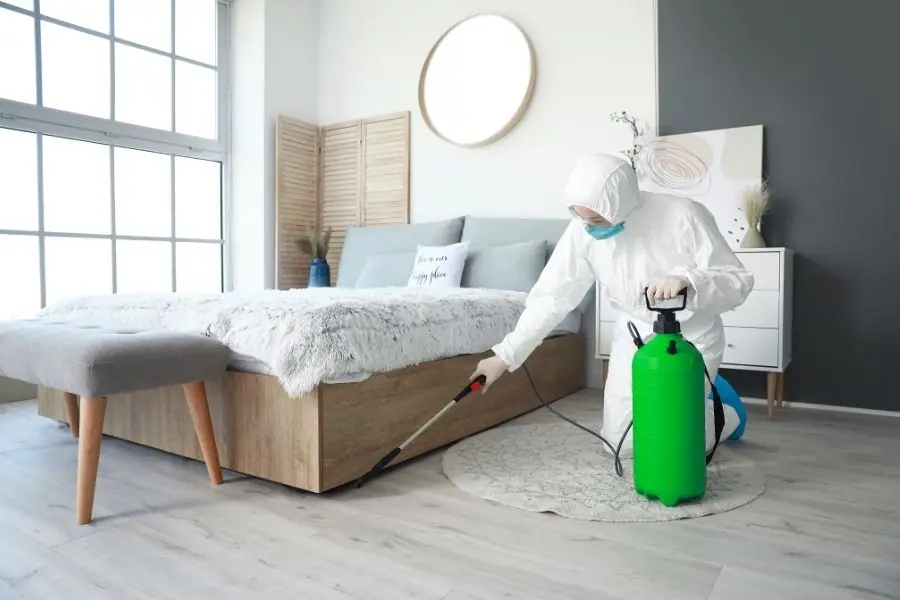
- Personal protection. Technicians wear respirators, gloves, and disposable suits suited to the hazard.
- Gross removal. Blood, tissue, and saturated items are removed and bagged.
- Material removal. Carpet, carpet pad, drywall, subflooring, and furniture that absorbed fluid are cut out and discarded, because porous materials cannot be reliably disinfected.
- Cleaning and disinfection. Remaining surfaces are cleaned, then treated with a disinfectant left on for its full required contact time.
- Odor treatment. Lingering odor is neutralized at the source.
- Waste transport and disposal. Biohazard waste is packaged, labeled, and transported as regulated medical waste.
- Final walkthrough. We review the space with you before we leave.
Step six depends on using the right products, which raises the question of what cleaners actually use.
At a glance
What chemicals do crime scene cleaners use?
Crime scene cleaners use detergents, enzyme cleaners, EPA-registered disinfectants, and odor-control treatments, each in a specific order. Using them in sequence matters, because a disinfectant cannot work through dried blood or grease.
| Product type | Purpose | When it is used |
|---|---|---|
| Detergents and degreasers | Lift visible soil and body fats from surfaces | First, before disinfecting |
| Enzyme cleaners | Break down proteins in blood and tissue that cause staining and odor | On organic residue, especially in grout, concrete, and seams |
| EPA-registered disinfectants | Kill bloodborne pathogens; products are chosen from EPA lists effective against HIV and hepatitis B, such as hydrogen peroxide, quaternary ammonium, or chlorine-based formulas | After cleaning, with the full label contact time |
| Odor treatments | Neutralize odor molecules rather than mask them, using methods such as thermal fogging, hydroxyl generators, or ozone in unoccupied spaces | After removal and disinfection |
| Sealants and encapsulants | Lock in any trace residue on structural wood that stays in place | Before rebuilding |
These same products and methods apply to one of the most common scene types we handle, which is cleanup after an assault.
Assault scene cleanup
Assault scene cleanup removes blood and bodily fluids left after a physical attack, and it is often more spread out than people expect. Victims may move through several rooms, so blood can be found on door handles, light switches, stair railings, and walls far from where the assault began.
What makes assault scenes different
- Widely scattered contamination. Small drops and smears are easy to miss, so we check high-touch surfaces in every room the person passed through.
- Investigative residue. Fingerprint powder and chemical reagents are often left behind and need their own cleaning methods.
- Ongoing occupancy. The victim or family may still live in the home, so discretion and minimal disruption matter.
- Possible victim compensation. Because a crime occurred, the cleanup may qualify for state crime victim compensation, explained in the insurance section below.
The amount of spread affects how long a job takes, which is the next thing most people want to know.
How long does trauma scene cleanup take?
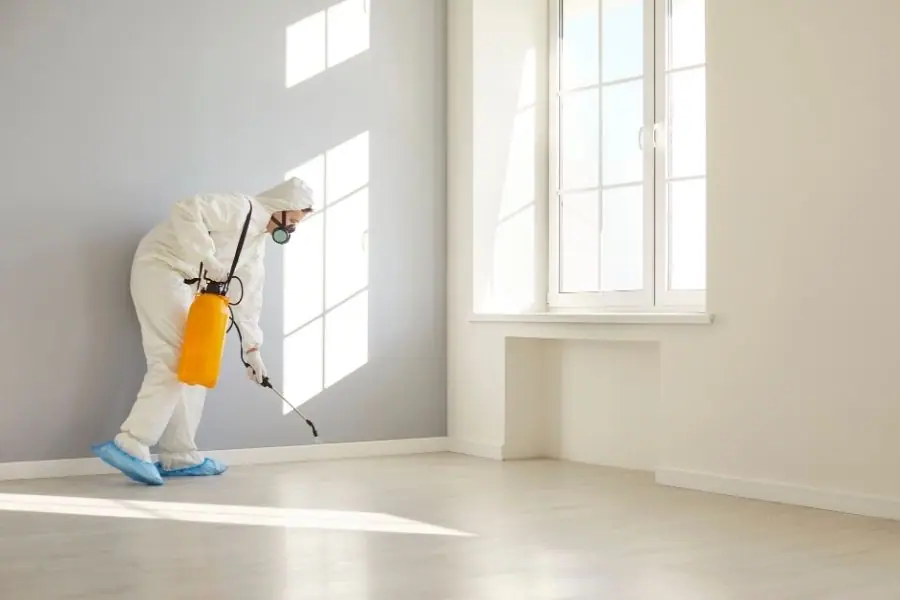
Most trauma scene cleanup jobs take anywhere from a few hours to several days, depending on how much area is affected and how deeply fluids have soaked in. As a general guide:
- Small, contained scenes on hard surfaces are often finished in a single visit.
- Single-room scenes with carpet or drywall removal commonly take one to two days.
- Multi-room scenes or decomposition can take several days, especially when subflooring must be cut out or odor treatment needs time to work.
Time also depends on how long fluids sat before cleanup began, since older contamination penetrates further. We give you an expected timeline with your written quote. Because time, materials, and labor go together, the length of a job closely tracks its cost.
At a glance
How much does it cost to have a crime scene clean up?
The cost of trauma scene cleanup depends mainly on the size of the affected area, how long fluids were present, and whether structural materials must be removed. We do not quote prices over the phone; we provide a written quote after a free inspection.
For general context only, the ranges below are commonly cited US industry estimates. They are not Trusted Crime Scene Cleanup pricing, and your quote may fall inside or outside them.
| Scenario | General industry estimate (US) |
|---|---|
| Minor trauma or suicide | About $1,500–$5,500 |
| Homicide or violent crime | About $2,500–$9,000 |
| Severe decomposition | About $4,000–$20,000+ |
| Multi-room or large-scale contamination | About $7,500–$25,000+ |
What drives the price
| Cost factor | Why it matters |
|---|---|
| Size of affected area | More square footage means more labor, supplies, and disinfection time |
| Time fluids were present | Older contamination soaks deeper and often requires more removal |
| Materials involved | Carpet, upholstery, and mattresses usually must be discarded; sealed hard surfaces can often be cleaned |
| Structural removal | Cutting out drywall, subflooring, or trim adds labor and waste volume |
| Access | Upper floors, tight crawlspaces, or vehicles can slow the work |
| Waste volume and disposal | Regulated medical waste is billed by volume and must be handled under state and federal rules |
| Odor severity | Decomposition odor may need extended treatment |
For a fuller breakdown, see our guide to crime scene cleanup cost and what insurance covers. Financing is available, and many families also look to insurance to cover part of the bill.
Does insurance cover trauma scene cleanup?
Homeowners and commercial property insurance sometimes cover part or all of trauma scene cleanup, depending on the cause of the event and the terms of the policy. Coverage is often tied to whether the damage counts as a sudden, accidental loss to the property, and some policies limit or exclude specific causes.
- Homeowners and renters policies may cover cleanup and replacement of damaged materials.
- Landlord and commercial policies may cover cleanup in rental units, hotels, and businesses.
- Auto policies with comprehensive coverage may apply to vehicle cleanup.
- Crime victim compensation programs run by many states may reimburse crime scene cleanup costs for victims or their families when a crime occurred, usually with filing deadlines and a police report requirement.
Read moreShow less
We help homeowners with insurance claims, including documenting the scene and providing the paperwork adjusters typically request. With payment options understood, the remaining decision is which company to trust with the work.
How do you choose a trauma scene cleanup company?
Choose a trauma scene cleanup company that follows OSHA's Bloodborne Pathogens Standard, disposes of waste legally, is insured, and gives you a written quote before work starts. Questions worth asking any provider:
- Do your technicians train and work under the OSHA Bloodborne Pathogens Standard (29 CFR 1910.1030)?
- How do you transport and dispose of regulated medical waste, and can you document it?
- Are you insured?
- Will you give me a written quote after an inspection?
- Will you work with my insurance company?
- Are you available any time of day or night?
- How will you protect my privacy?
Trusted Crime Scene Cleanup is insured. We offer free inspections, written quotes, help with insurance claims, financing, and 24/7 emergency service for residential and commercial properties. You can learn more about Trusted Crime Scene Cleanup or see our full list of services. When you are ready, reaching us is simple.
Call for discreet help 24/7
You can call us any hour of any day at +1 (945) 941 21-70, or request a free inspection through the contact form. We discuss the details of your situation only with you and anyone you authorize, and we answer your questions plainly so you know what will happen before we begin.
When you call, it helps to have:
- The property address and type (home, rental, business, or vehicle)
- Whether police have released the scene
- A rough idea of which rooms or areas are affected
- Your insurance information, if you plan to file a claim
FAQ
Frequently asked questions
Is crime scene cleanup a good career?
It can be a meaningful career for people who are steady under stress, careful with safety procedures, and comfortable with difficult scenes. The work is physically demanding, schedules can be irregular because calls come in at all hours, and the emotional side requires good coping habits.
Is crime scene cleaner a high paying job?
Pay varies widely by region, employer, experience, and how often a technician works emergency or after-hours calls. Entry-level roles often pay in line with other skilled trades, and experienced technicians or supervisors generally earn more.
Do you need a degree to be a forensic cleaner?
No degree is generally required. Employers typically look for bloodborne pathogen training, respirator and protective equipment training, and hazard communication knowledge, along with on-the-job experience.
Do you clean after police release the scene?
Yes. We begin only after investigators have finished and released the scene to the owner or responsible party. If you are unsure whether the scene has been released, call us and we can help you confirm before scheduling.
Can you handle a scene in a vehicle?
Yes, we offer vehicle biohazard cleanup. Fluids often soak into seat foam, carpet, and padding, so those parts may need removal before the interior is disinfected and deodorized.
How do you keep the cleanup discreet?
We share details only with you and the people you authorize, coordinate timing with you, and keep the work contained inside the property as much as possible. For businesses such as hotels, we plan the job to limit disruption to guests and staff.
If you are facing a trauma scene now, call Trusted Crime Scene Cleanup at +1 (945) 941 21-70 for a free inspection, day or night.
Why choose us
Why choose Trusted Crime Scene Cleanup?
Free estimates
Get a clear, no-obligation estimate before any work begins.
Licensed & insured
Your property and our crew are protected on every project.
Residential & commercial
One team for homes, multi-family and commercial properties.
Locally owned & operated
A local team serving your community and the surrounding area.
Get in touch
Find crime scene cleanup help near you
Request a free estimate online or give us a call — our team will follow up quickly.
- Call us+1 (945) 941 21-70
- Hours24h